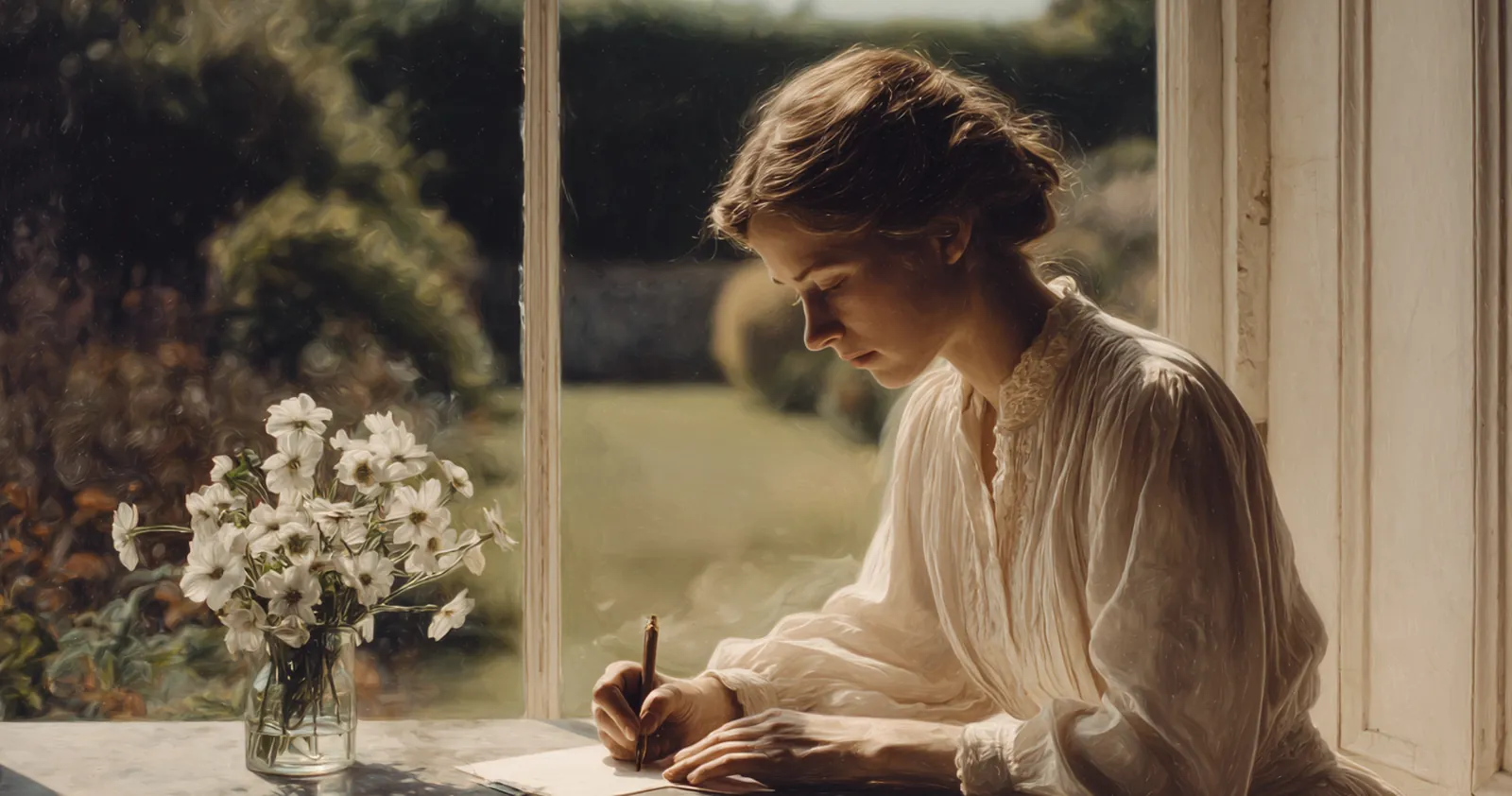
The most famous idea about grief, the five tidy stages marching from denial to acceptance, was never meant as a map for the bereaved, and grief itself has rarely read the memo. Real grieving does not proceed in stages. It arrives in waves, on anniversaries and in supermarket aisles, softer over time but never scheduled, and it does not end so much as change address.
The bond continues
For most of the last century, the official story was that healthy grieving meant detaching: letting go, moving on, closing the chapter. Then researchers actually listened to bereaved people and found the opposite. The healthiest mourners were not the ones who severed the bond but the ones who continued it in a changed form: talking to the person, keeping their recipes, carrying their voice into decisions, laughing at what they would have said. Grief, it turns out, is not love ending. It is love continuing under a new arrangement.
Grief is love, continuing. The relationship does not end. It changes address.
This matters practically, because half the pain of modern grieving is people judging their own healthy grief against a schedule that was never real. Still crying at year two is not failure. Feeling fine on Tuesday and destroyed on Wednesday is not relapse. And an ending nobody died for, a divorce, an estrangement, a country left behind, a body that changed, is allowed to be grieved with the same seriousness, even though no one sends flowers for it.
What paper can hold
Writing has a particular usefulness in grief, for one blunt reason: the person most able to hear everything you need to say is no longer available to hear it. The page takes the overflow. Decades of research on writing about painful experience keep finding the same quiet result: putting the hardest things into words, over repeated sittings, tends to ease their grip on body and mind. Not instantly, and not by making the loss smaller, but by giving it somewhere to exist outside the chest.
Three written practices carry most of the weight. Memory pages, because the terror under early grief is often forgetting, and writing the small true details, the laugh, the phrase, the way they stood in doorways, files the person somewhere safe. Letters, because the conversation does not end just because one side of it did; a letter can update, apologise, rage, thank. And the unsent letter especially, for the relationships that ended with things unsaid, where what needs writing could never actually be delivered. It is never sent. It works anyway.
Gentleness is the method
Grief writing has one rule the other kinds do not need spelled out: stop while it still feels held. Twenty minutes, not three hours. A steadying page before a deep one, and something warm afterwards. If a wave arrives mid-page, that is not the practice failing; it is the practice working, and the page will keep until you come back.
And a plain word about help: grief that leaves someone unable to function for months, or that carries thoughts of not wanting to be here, deserves a professional's company. Paper is a good companion in mourning. It is not meant to be the only one.
Grief is not a problem to solve. It is a thing to be held.
The Grief and Transitions Journal holds a loss with a name, or an ending nobody called one. The Unsent Letter is five guided letters for what was never said.